

How Generator Synchronization Works
A single generator has a fixed capacity. When a site’s load exceeds what one unit can handle, the solution is to run multiple generators together. There is a second reason this matters. A generator that is too large for the job does not run well. This is known as underloading — operating a generator well below its rated capacity for extended periods. Over time, this can lead to incomplete fuel combustion, carbon buildup, and severe engine damage.
This is where parallel operation comes in — running two or more generators together so they function as one system. It offers two practical benefits. First, redundancy: if two generators are running and one goes down, the other keeps supplying power, so your site does not lose electricity. Second, it lets you take on a higher load: rather than purchasing a single larger, more expensive generator, you can combine multiple smaller units to meet the same demand.
Before two or more generators can work together safely, their output must match: the same voltage, the same frequency, and the same phase angle. Connecting them without matching can cause reverse power, which could damage the generators and the equipment they supply. Once synchronized, the load will be shared equally, and you can get the combined output at the distribution board.
Automating this process enables businesses to scale power capacity by better allocating their resources (in this case, smaller generators) rather than investing in a single oversized generator and risking the underloading problems described earlier.
Denyo's SmartSYNC System: Auto Parallel Operation
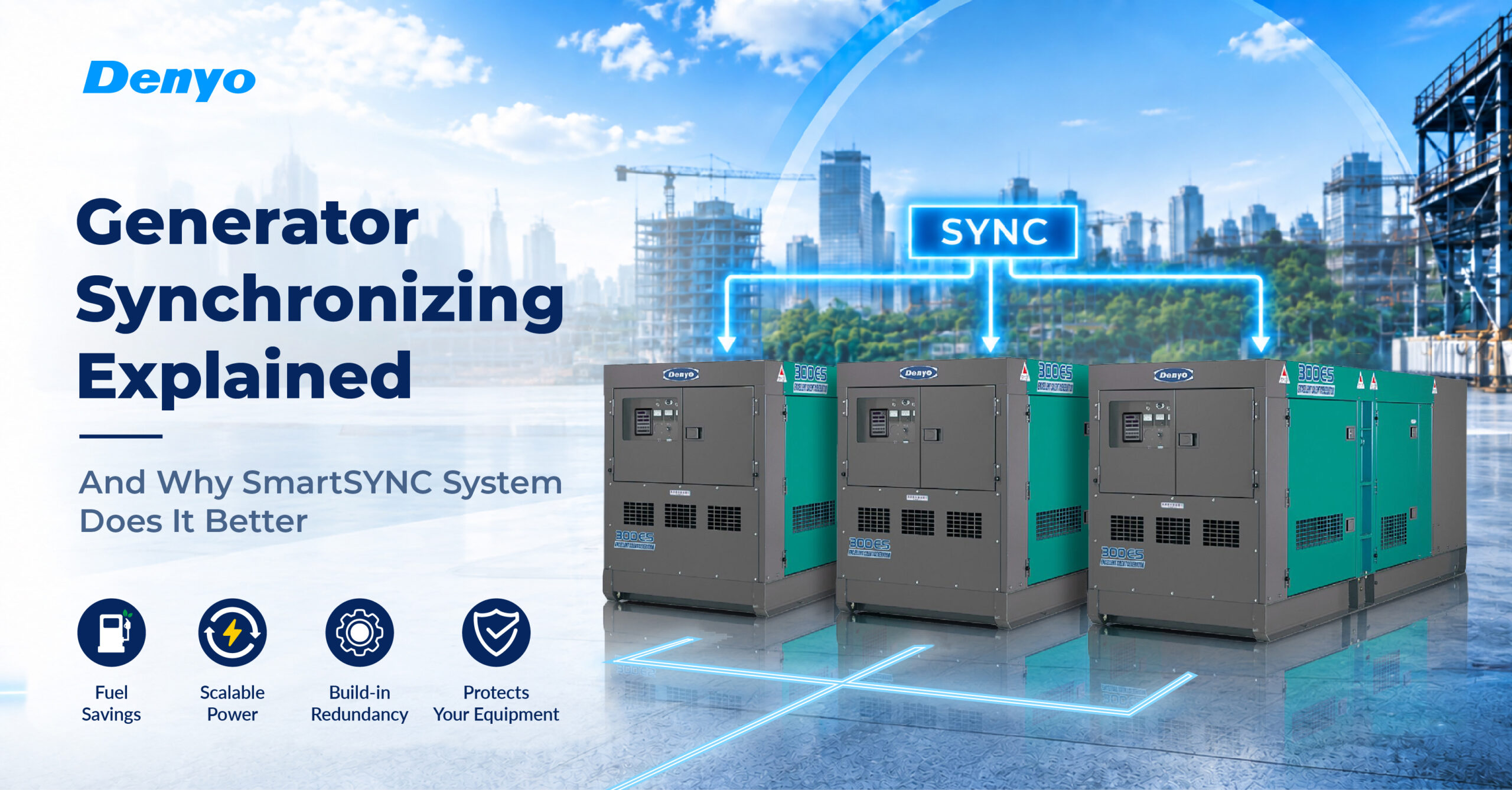
Denyo’s SmartSYNC system automates this synchronization process, matching the voltage and frequency of multiple smaller-capacity generators so they can run in stable parallel operation, supporting loads that are both larger and less predictable than a single generator can handle well.
What that means for you:
- Fuel savings through load-dependent start-stop. SmartSYNC runs only the number of generators your current load requires. When demand is low, it activates the minimum generators needed and keeps the rest on standby; as demand rises, additional generators start automatically. Running smaller generators at their most efficient point, rather than one large unit operating above or below its ideal range, reduces fuel consumption. Denyo cites savings of up to 16% in fuel cost compared to running a single oversized generator.
- Scales up to 32 generators. SmartSYNC can coordinate up to 32 generators at once, forming a power system capable of far higher output than any single unit — sufficient to meet the demands of most sectors.
- Programmable to your operation. SmartSYNC can be configured in advance to bring extra generators online, ready for a large load (for example, a construction crane lifting a heavy load), reducing the risk of the whole system tripping when that load comes on.
- Built-in redundancy. If one generator fails, a standby unit automatically activates and runs in parallel with the active group. The faulty generator can then be isolated for repair without disrupting the rest of the operation. This is something a single large generator cannot offer.
- Protects your equipment long-term. By matching the number of active generators to actual demand, SmartSYNC keeps generators running within their healthy range and avoids the underloading problem described earlier, supporting Denyo’s broader commitment to more efficient and lower-emission operations.
Proven in the Field
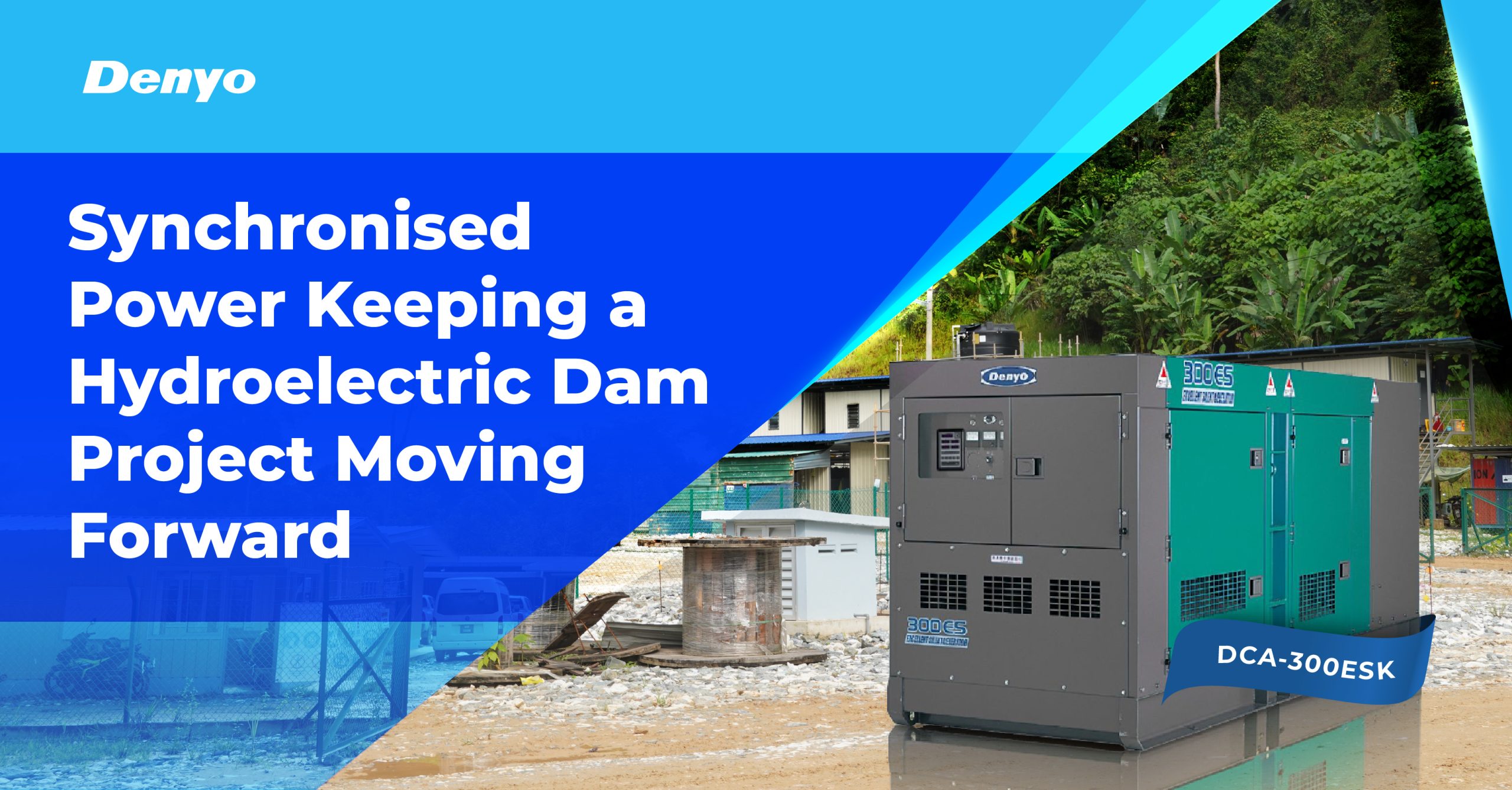
At a hydroelectric dam project in Gua Musang, Kelantan, Denyo’s generator synchronisation was put to the test on a live construction site. The dam’s permanent power infrastructure was not yet complete, so power demand varied throughout the day as site offices, worker accommodation, and daily operations came online. This is a load pattern a single generator would struggle to serve efficiently, and one that multiple independent generators could serve unevenly.
The project team addressed this by running two Denyo DCA-300ESK generators in synchronisation, sharing the electrical load evenly and responding smoothly to changing demand. The result was improved operational reliability, reduced stress on individual machines, and consistent power quality across all connected facilities, with noise levels kept well controlled despite continuous operation.
Building Your Brand Confidence
Reliability affects your brand, not just your operations. A single generator failure that brings down your entire power supply does not just cost you output — it costs you the confidence your customers and partners place in you. SmartSYNC’s redundancy means a single point of failure does not have to result in a full shutdown. That is the kind of continuity businesses in sectors with zero tolerance for downtime need to protect their reputation as much as their operations.
Conclusion
If your operation is outgrowing a single generator, or you need the flexibility to scale power output up and down with demand, Denyo’s SmartSYNC system can deliver that without the fuel waste or single-point-of-failure risk of an oversized unit, while keeping equipment cost, operation cost, reliability, redundancy, maintainability, and serviceability all working in your favour. Contact us for a no-obligation discussion.