
At Denyo, we understand the challenges of selecting a suitable welding machine for your application when numerous options are available. Here are 4 factors to consider before making your big purchase:

There are many welding processes to choose from, each possessing distinct characteristics and suitability depending on the specific application. Hence, it is essential to determine the most suitable process for your business’s needs or requirements. Subsequently, you can make an informed decision about the most suitable welding machine to use.
At Denyo, we understand the challenges of selecting a suitable welding machine for your application when numerous options are available. Here are 4 factors to consider before making your big purchase:
The types of metal you weld play a significant role in your decision-making. Different welding machines have characteristics that enable them to perform unique welding processes, making them suitable for various materials. Therefore, it is essential to recognise the four main types of welding processes: Gas Metal Arc Welding (GMAW/MIG), Gas Tungsten Arc Welding (GTAW/TIG), Shielded Metal Arc Welding (SMAW), and Flux Cored Arc Welding (FCAW).
Gas Metal Arc Welding – MIG welding utilises a wire welding electrode on a spool that is automatically fed at a constant, pre-selected speed. The arc, created by an electrical current between the base metal and the wire, melts the wire and joins it with the base, producing a high-strength weld with an outstanding appearance and little need for cleaning. MIG can handle almost any weldable metal, the most common being carbon and stainless steel. It is popular due to its speed and efficiency and is most commonly used in construction and automotive industries.
Gas Tungsten Arc Welding – TIG welding uses a non-consumable tungsten electrode to produce the weld. The weld area is protected from atmospheric contamination by shielding gas (usually argon) and filler metal. TIG is often the best process for welding thin and non-ferrous materials, such as steel and aluminium. It is popular due to its precision and control and is most commonly used in the aerospace industry.
Shielded Metal Arc Welding – SMAW welding uses an electric current flowing from a gap between the metal and the arc-welding electrode. SMAW is often used for heavy-duty work involving industrial iron and steel, like carbon steel and cast iron. It is popular due to its simplicity and is most commonly used in pipelines and the shipbuilding industries.
Flux Cored Arc Welding – FCAW welding uses heat from an electric arc to fuse base metal in the weld joint area. This arc is struck between the metallic workpiece and the continuously-fed tubular cored consumable filler wire, with the wire and the metallic workpiece melting to form a weld joint. FCAW works well with ferrous metals, such as carbon steel, cast iron, and stainless steel. It is popular due to its efficiency and is most commonly used in the mechanical industry.
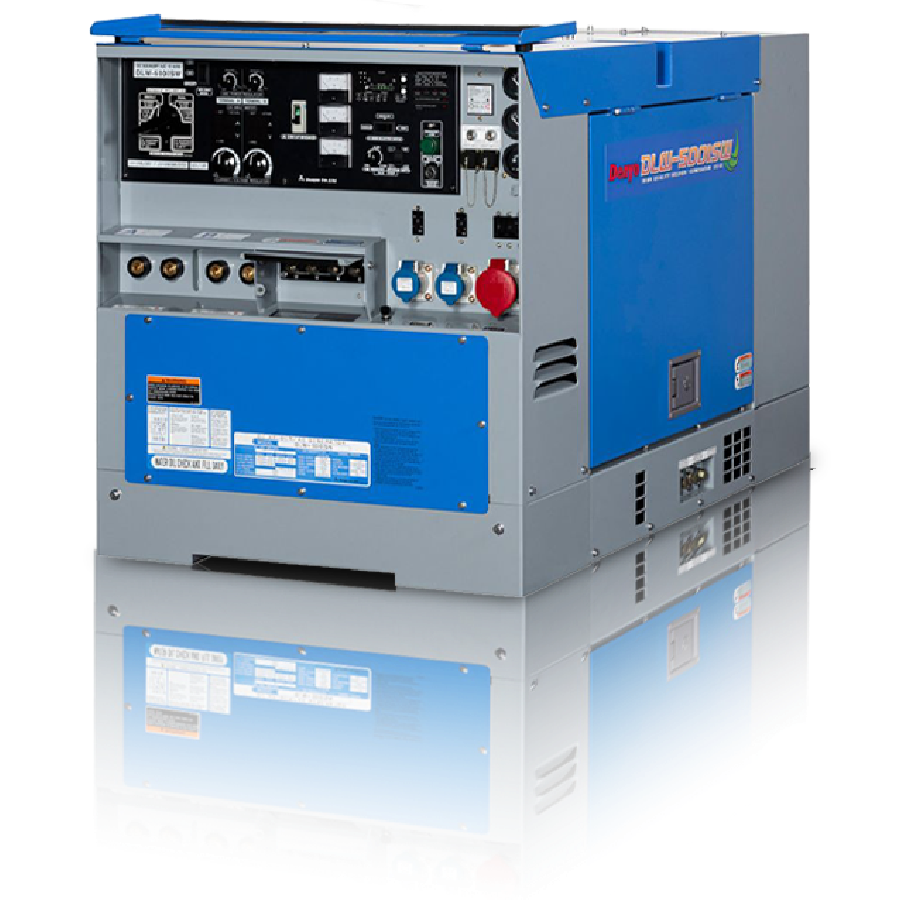
If you are looking for a single machine with multiple welding capabilities, you could consider a multi-purpose engine welder, such as the Denyo DLW-500ISW, which is capable of performing different welding processes when combined with dedicated equipment and maximises resources in the field through two independent weld outputs (Dual-operator Welding), thus improving job productivity.
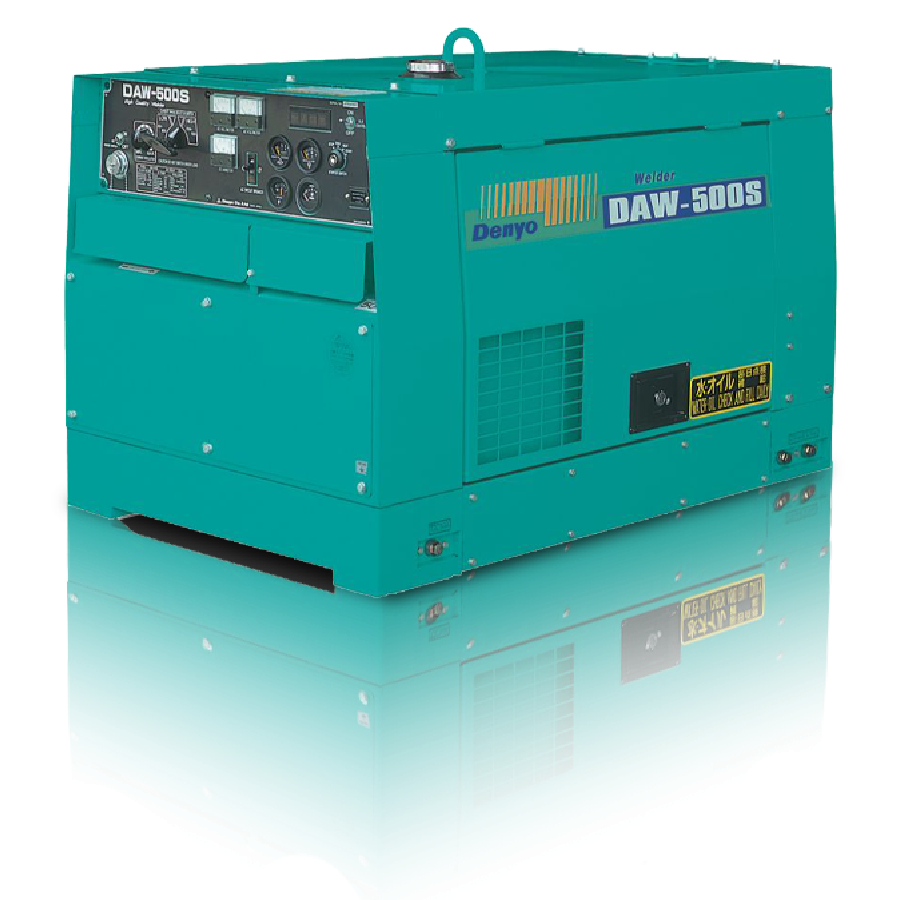
Consider the thickness of the metal used in most of your applications. Thicker metals require higher amperage (A) to create strong welds. Different welding machines have varying amperage ranges, so you must choose one that can handle the thickness of the metal you will be working with. If you work with metals of varying thickness, a convenient option would be to get a welding machine with a current control system and an amperage range of 40-500. This feature is present in Denyo’s high-performance engine welder, the Denyo DAW-500S. This welding machine can provide stable arc performance for all sizes of welding rods and can be used in a wide range of applications, including pipeline construction.
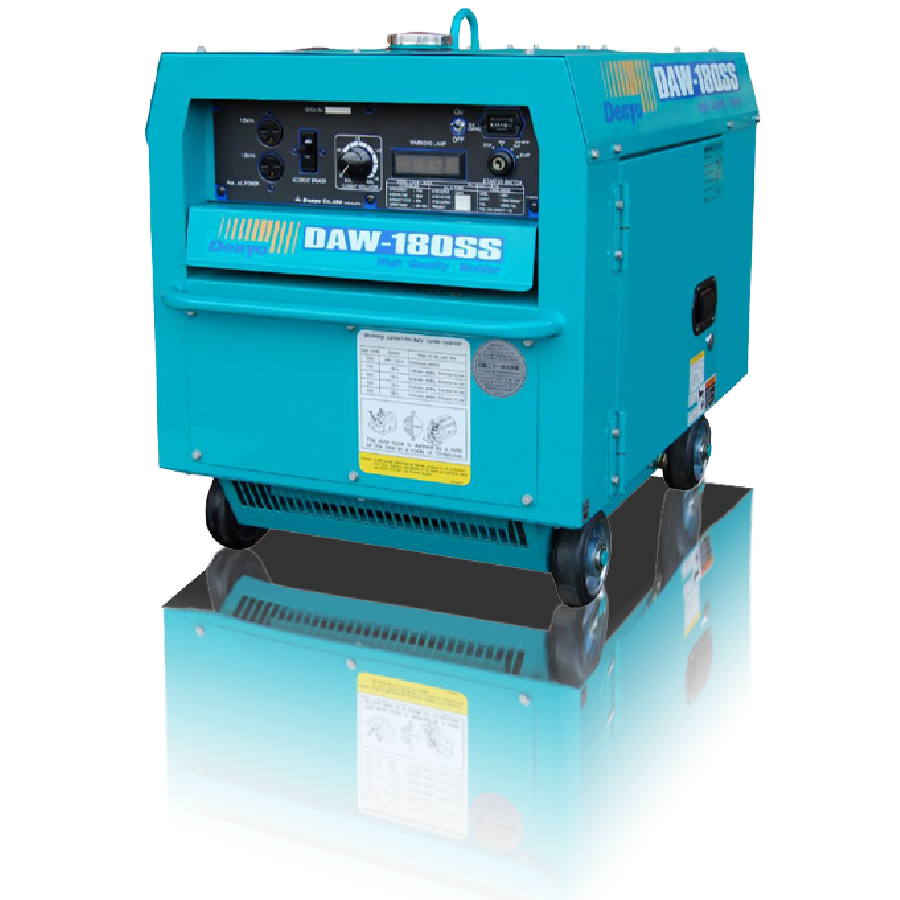
The location also impacts the type of welding machine you should purchase. A traditional plug-in type may suffice if you primarily work in a fixed location. Additionally, welding machines may require different voltage levels, so ensure your workspace has the necessary power supply or select one that can accommodate the available voltage. However, if you anticipate needing portability, consider investing in a Denyo engine welder, which mitigates the need for an external power source. With compact designs for manoeuvrability, Denyo engine welders are ideal for remote applications and for those constantly moving from site to site. For beginners in welding, we offer a lightweight and compact unit that delivers a current range of 30-180A, featuring excellent manoeuvrability with its built-in wheels, the Denyo DAW-180SS.
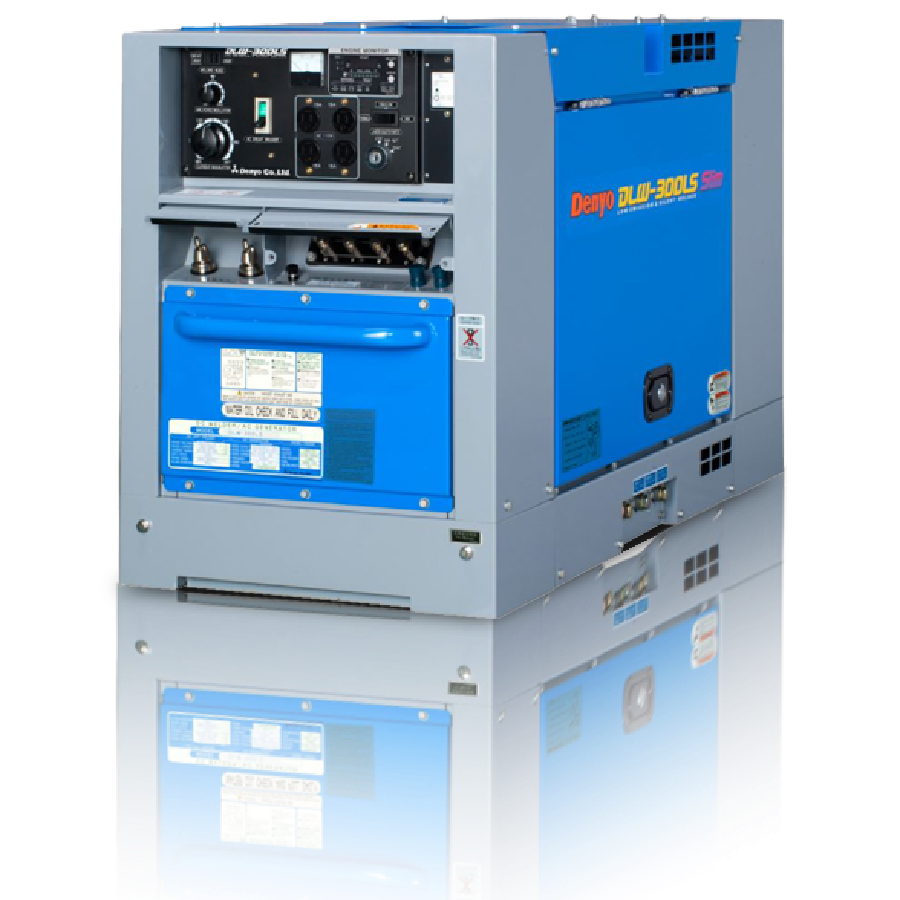
The duty cycle, typically represented as a percentage, is a welding equipment specification which defines the number of minutes, within a 10-minute period, during which a given welding machine can safely produce a particular welding current. For example, the Denyo DAW-180SS is rated at a 50% duty cycle and can operate for five minutes out of every ten before needing a cool-down period. With the wide range of Denyo engine welders, several units feature a 100% duty cycle, such as the Denyo DLW-300LS, which enables sustained welding at a given amperage output for an extended period without interruption or downtime. This is made possible by adopting high-performance alternators and allowance-rich engines in our units.
Denyo welding machines offer many benefits for infrastructure projects and other welding applications. With sustainability in mind, Denyo engine-driven welding machines are designed with a closed breathing system that keeps the blow-by gas in the machine. Additionally, the aluminium radiator does not cause pollution and has met the Stage 2 emission regulations. As such, choose a brand that prioritises high performance while considering sustainability and safety.
For more information about our Denyo welding machines, contact us for a non-obligatory discussion today.