
* A-weighted decibels, abbreviated dBA, are an expression of the relative loudness of sounds in air as perceived by the human ear.
How is Sound Measured and Why Does It Matter?
How is sound measured?
Do you know that decibels are different from other familiar scales of measurement? While many standard measuring devices, such as rulers, are linear, the decibel scale is logarithmic. The logarithmic scale more accurately represents the changes in sound intensity that human ears can perceive.
To explain linear measurement, consider a building that is 100 feet tall. By adding another 10 feet, the building will be 10 per cent taller, which would seem slightly more elevated. Using the logarithmic decibel scale, if a sound is 80 dBA, and we add another 10 dBA, the sound will be 10 times more intense and seem about twice as loud to our ears. If a sound is increased by 20 dBA, it is 100 times louder.
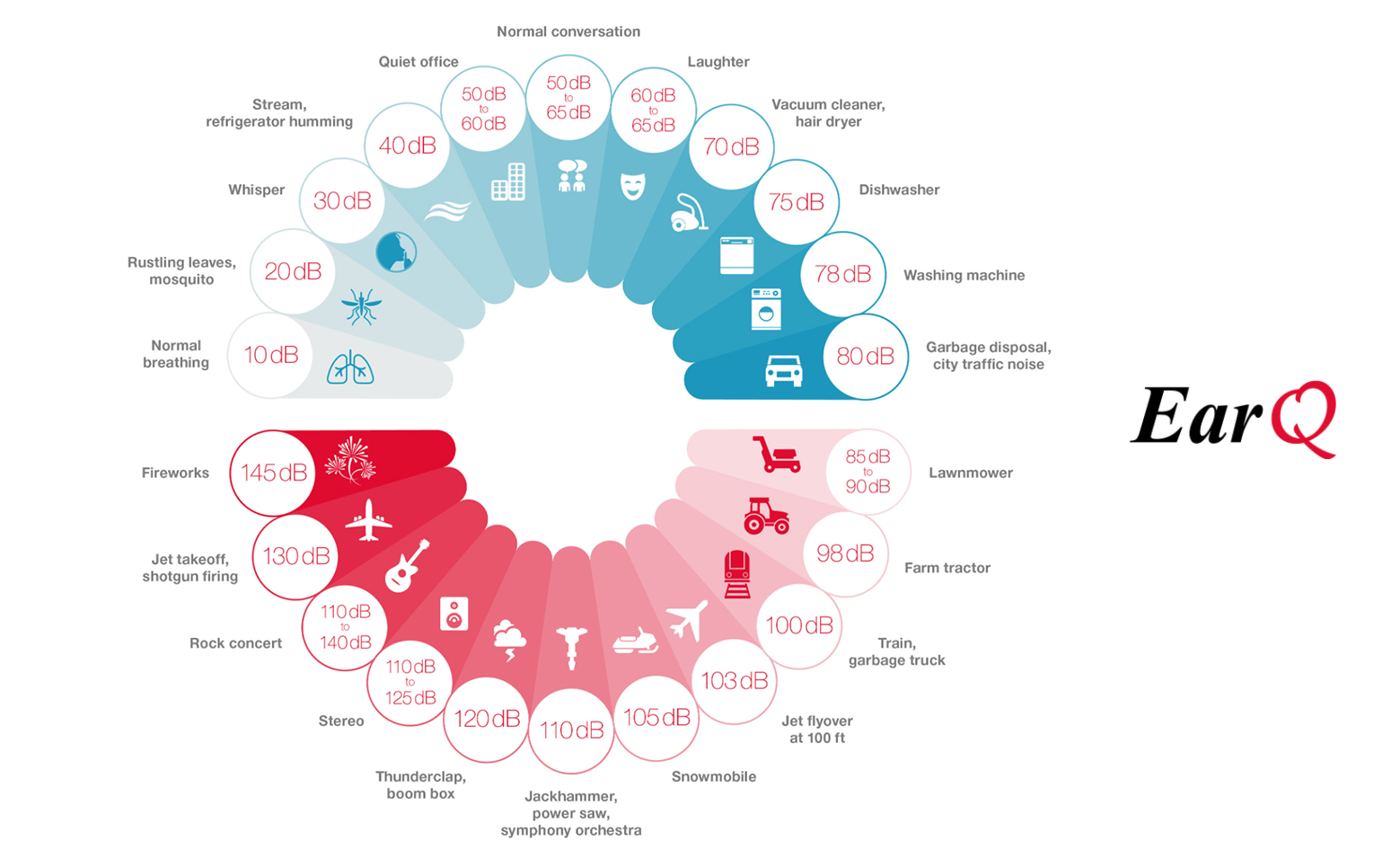
Here is an illustration of common environmental sounds and how they measure up:
Image credit: EarQ
Why does it matter?
As explained, even a small increase in decibel level can significantly impact your hearing health. As decibel rises, your hearing is more likely to be damaged and more quickly than you might expect. This can lead to many implications and gradually reduce your ability to understand speech in noisy places. Life can become a downward spiral when dealing with hearing issues, stress and decreased productivity due to fatigue.
Like any other noise pollution, noises caused by construction sites have always been a concern locally, especially with conventional machinery equipment constantly producing loud noises, causing adverse reactions from people living in the site’s proximity.
While it is not easy to minimise the noisy activities on construction sites, such as jackhammers, tamping machines, and engine generators, which are indispensable machines needed to carry out the project, it is best to control the noise at the source. Companies, consultants, and contractors must be aware that they are directly responsible for the construction noise, for people’s quality of life lies in their willingness to introduce a low-noise purchasing policy for their machinery equipment.
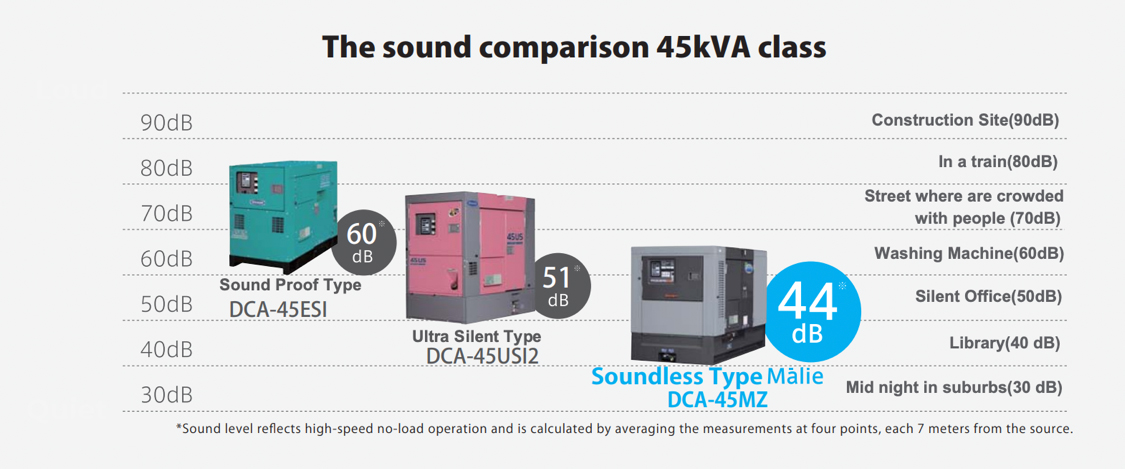
The growing concerns about environmental noise have prompted Denyo to innovate in creating a full range of ultra-quiet generators that are durable, energy-efficient, and quiet – even when operating at full load. Our latest engineering marvel, the Malie DCA-45MZ, registers at only 44 dBA in sound emission, comparable to the sound of a silent library.
Denyo believes that it has a responsibility to deal earnestly with environmental issues and step up on engineering efforts to achieve a liveable environment for all. If you have any further questions about our article, please don’t hesitate to contact us to address your concerns. Thank you.