
A single-phase generator delivers power in a simple manner, as shown in the graph above, and usually provides power at around 190 volts and 220 volts. This configuration is commonly used in applications with light electrical loads, such as computers, lights, fans, and refrigerators. Due to their simplicity, they are generally smaller than three-phase generators, making them ideal for smaller-scale operations, such as backup power supplies or small commercial/residential applications.


Overview
When selecting a generator to meet your power needs, it is crucial to understand the distinctions between a three-phase and a single-phase configuration. The distinction between the two has a significant impact on various aspects of your operations, including efficiency, cost, and application suitability. In this article, we will analyse the critical differences between single-phase and three-phase configurations to help you make an informed decision when selecting a generator.
What is a Single-Phase Generator?

Fig.1 Single-Phase Power
What is a Three-Phase Generator?
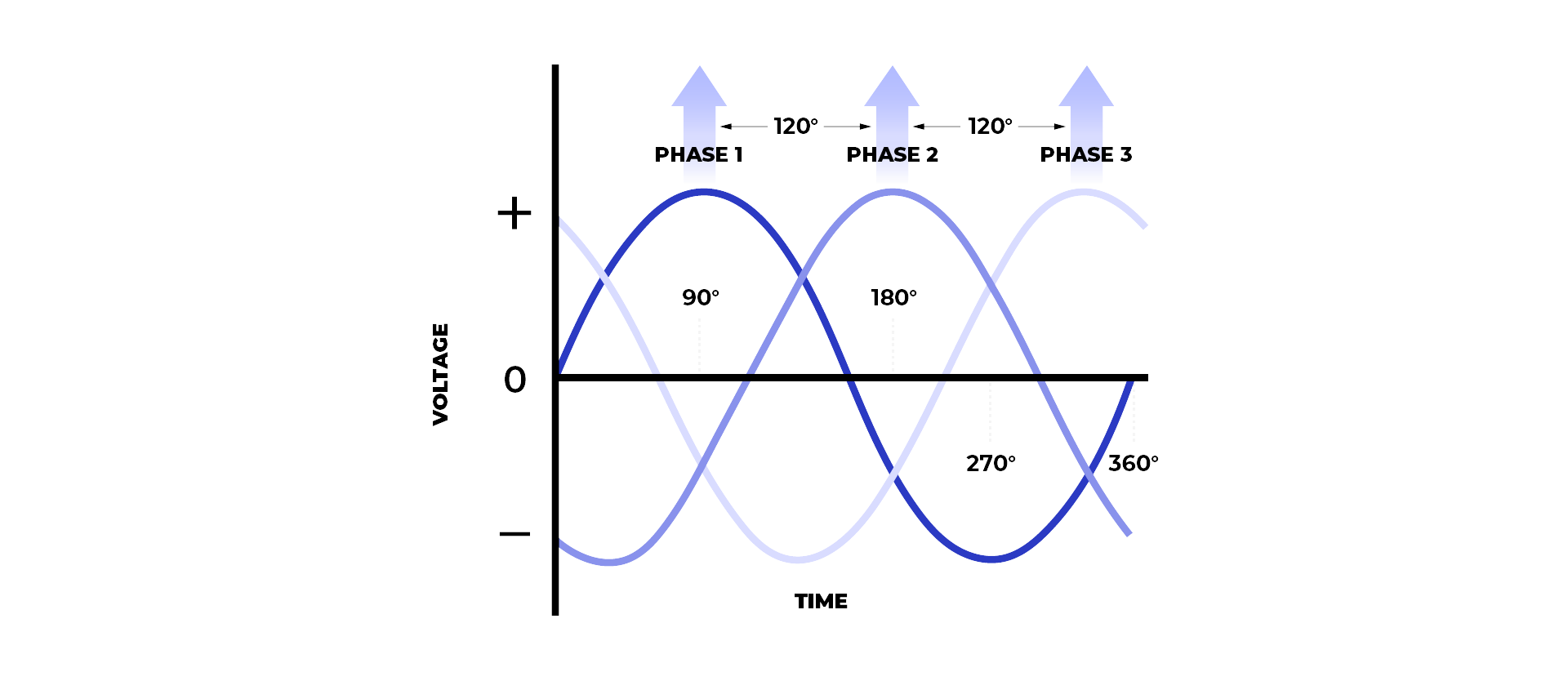
Fig.2 Three-Phase Power
Conversely, a three-phase generator delivers power in a complex manner, as shown in the graph above, and typically provides power at voltages of around 380 volts and 440 volts. This configuration is commonly used in high-load equipment such as air compressors, industrial water pumps, and ventilation fans. Due to its stable and constant power flow, a three-phase generator is typically found in heavy industries such as agriculture, construction sites, and data centres.
Key Differences between Single and Three-Phase Generators
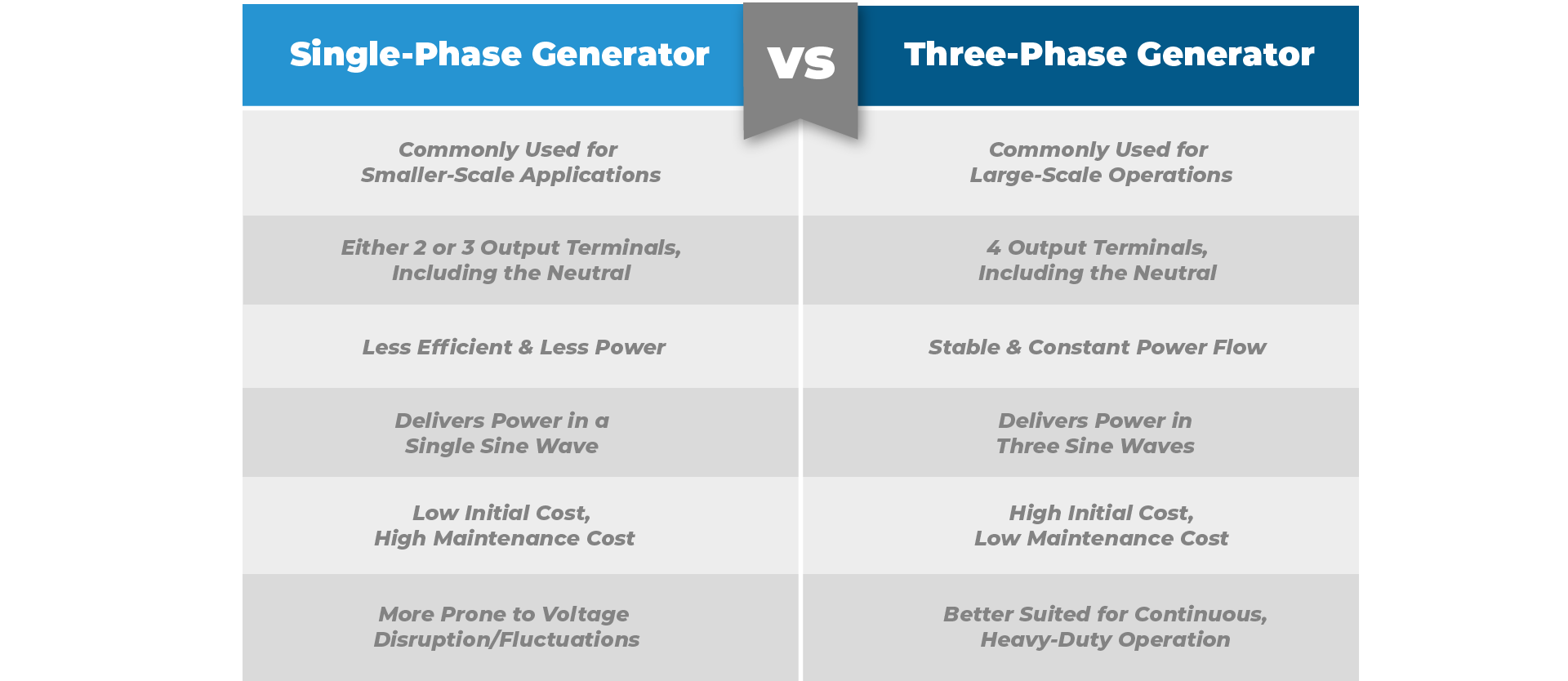
The primary difference between a single-phase and a three-phase generator lies in how each configuration generates power. Typically, a single-phase is fitted with either one (1) or two (2) wires and a neutral, producing power in a single sine wave, whereas a three-phase system is fitted with three (3) wires along with a neutral, producing power in three sine waves that are 120 degrees out of phase with each other, contributing to a more constant and stable power flow. As three-phase generators provide a smoother and more reliable power delivery, they are crucial in powering sensitive loads such as industrial motors.
Can I Power a Single-Phase Generator on a Three-Phase Load or Vice Versa?
Operating a single-phase generator with a three-phase load, or vice versa, can lead to unbalanced load distribution and overloading. This occurs when the electrical load is not evenly distributed across all phases in a three-phase configuration or between the two phases in a single-phase configuration. An unbalanced load typically results from mismatched equipment, incorrect phase connections, or uneven load distribution, causing an unequal distribution of electrical load.
This can cause overheating in your generator, potentially damaging the machine’s parts and internal components, including the alternator, bearings, radiator core, and exhaust valve. Such damage can lead to extensive repairs or even make the generator irreparable.
Maintaining your generator’s longevity and durability can be best achieved by matching a single-phase generator with a single-phase load, just as a three-phase generator is matched with a three-phase load. Though not advisable, you can still apply opposing configurations to loads with minimized wear and tear. Please find out more through our Common Misconception: Generator Application Mismatch video.
Which Configuration Should You Choose?

When choosing between a single-phase and a three-phase generator, several factors must be considered, including application, load requirements, efficiency, and cost. In summary, choose a single-phase generator when your intended use is for residential, small commercial, or light power requirements. On the contrary, three-phase generators are typically used for industrial, commercial, and large-scale power requirements where efficiency and power continuity are crucial.
Conclusion
Selecting the right power generator for your operation can be tricky. It is important to consider not only your current power requirements but also your future needs. Additionally, load variables and load configuration should be considered before making a purchase or rental. Numerous quality vendors offer consultation services, and their service team will advise you on which type of generator is most suitable for your operations. Do not hesitate to contact them, as it can save you time and minimise errors. Feel free to contact your generator vendor or click here to consult the Denyo team.