
Denyo SmartSYNC system synchronises and matches the parameters (such as voltage and frequency) of multiple smaller-capacity generators to perform stable parallel operation, supporting larger and inconsistent electrical loads. To provide the best fuel-saving profile, Denyo SmartSYNC integrated generators utilise a load-dependent start and stop feature, which enables multiple generators to start based on the current load demand level. Here is how the Denyo SmartSYNC system contributes to operational savings and increases power system reliability.

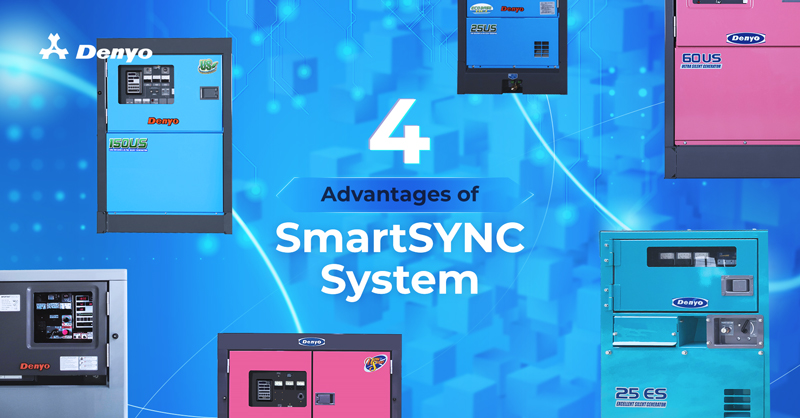
About Denyo SmartSYNC (Synchronizing System)
Fuel Savings and Self-Learning Mechanism
The load-dependent start and stop feature enables multiple generators to start, depending on the current load demand level. When there is a low load, the SmartSYNC system activates and turns on the minimum generator(s) required, while the remaining generators are configured to standby mode. As the load demand gets higher, subsequent generators will be turned on automatically, according to the actual load demand. With this function, users do not have to power a big generator throughout an operation and can expect significant savings in fuel cost!
To fulfil every single need from different sectors, the Denyo SmartSYNC system can support up to 32 generators simultaneously – forming a significant power system network to achieve a higher power output capacity. Furthermore, the SmartSYNC system is highly adaptable, allowing for the fulfilment of any operational request and programming using PLC logic. This enables sufficient generators to be started prior to the commencement of the major load.
Continuity of Operation and Safety
One single failure on a big generator can bring the entire power system down. The Denyo SmartSYNC system ensures continuity of operation by utilising multiple generators to supply power for a big load, which prevents unnecessary mechanical stress on a single big generator. The power system redundancy is greatly improved by having smaller generators working on SmartSYNC technology to optimize operation. A single failure of a generator will trigger the standby generator to be activated and run in parallel with the current active group seamlessly. Therefore, users can then isolate the faulty generator to carry out a repair job, ensuring no disruption to the entire operation.
Additionally, continuously running a large generator under load conditions can cause oil leakage, and the exhaust pipe will become clogged with unburnt carbon. If issues caused by low loading are left unattended, they will gradually shorten the generator’s lifespan and increase its susceptibility to failure.
Conclusion
In this article, we displayed four benefits of the Denyo SmartSYNC system that are closely interlinked to deliver value to our customers. Feel free to contact us, and we will be more than happy to assist you. Thank you.