


Overview
Since the tidal wave change in Malaysian politics in early May this year that saw the country’s first transition of power since independence in 1957, there have been significant movements in governance and policies in all aspects of Malaysian life, affecting more businesses and the general populace alike.
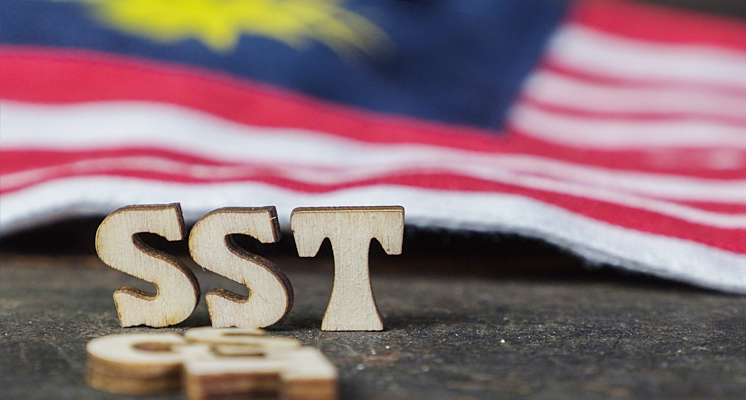
Particularly for businesses, the decision to scrap the unpopular Goods and Services Tax (GST) in favour of returning to the pre-2015 Sales and Services Tax (SST) has created much anxiety and confusion among business operators since the parameters of the SST, to be reintroduced starting 1st September 2018, are still thin at best.
As the tax regime extends to imports as well, companies that bring in industrial machinery regularly for their operations and projects need to be acutely aware of the implications, as even a percentage point difference in the numbers can make or break a purchase budget.
Here are a few key things you need to know about the incoming SST change.
1. Proper documentation and filing to ensure compliance
While on the surface the tax regime is reverting back to pre-2015 days, the implementation and administering of it is not. Beyond the political overtures, the GST was not a failure; it broadened the tax base, ensured proper tax compliance and put MYR 44 billion into the government coffers.
Tax practitioners are expecting some elements of the GST to be retained while others be improved upon, with the end result being a “hybrid” implementation. In particular, transparency and aspects of compliance such as filing of returns and tax invoicing look to stay.
In a draft of the workings of SST published by the Royal Malaysian Customs Department (Customs) on 19 July, a large proportion of the proposed mechanism mirrors that of the previous SST regime.
To the business community, this means adjusting current administrative and IT processes to comply with the necessary filing requirements, especially for import of goods and machinery from overseas.
For industrial equipment such as generators, the paperwork can be challenging with precise details to be provided from the manufacturing or supply source. With active deployment of equipment in over 130 countries around the world, Denyo is all too familiar with the level and depth of documentation required to clear customs and advises our customers accordingly to minimise hiccups along the way.
2. More business expected
The fundamental difference between GST and SST lies in the layers of the supply chain that are affected by the taxation.
GST affects every single layer of the supply chain; from supplier, manufacturer, retailer, all the way down to the consumer. At each layer, a 6% tax is levied and collected. If all the taxes at each layer is passed on to the next, the consumer in the end bears the full load of the tax at the end of the day, which primarily explains the wild unpopularity with it among Malaysians.
On the other hand, the SST is tax that only needs to be paid by the manufacturer. The other notable difference is that SST does not cover everything under the sun, unlike GST. Touch n’ Go reloads and interbank ATM withdrawals for examples, were not subject to tax in pre-2015 SST tax regime and would not be expected to be taxed once SST comes back into use.
This generally means that businesses and the consumer public will get to pay less for a number of goods and services. The costs of running a business are likely to go down while big ticket items such as properties are expected to have lower prices due to lowering costs of construction materials. Recreational expenses such as ticket prices to concerts and events are expected to be lower as well.
All these suggest optimism in the buying sentiments of the general public and business community which could create additional demand in the market, prompting the gears of the economy to get to work. In particular, businesses involved in the construction and development, as well as equipment rental industries, could do well in light of these movements in the market.
If your business is in the above-mentioned genres, take a closer look at these opportunities and ensure that you are well stocked and equipped to pounce on any that comes their way.
3. Take full advantage of the tax holiday before it goes away
Switching from one tax regime to another is a lot of work, involving multiple departments and agencies within the government apparatus to adjust their processes. The kinks need to be worked out before SST is reintroduced and reimplemented and this takes time.
So in the meanwhile, the Malaysian government has announced that until SST comes back into force on 1 September, GST will be zero-rated, essentially as good as waiving the tax on all transactions of goods and services in the interim.
Many businesses and the consumer public will be making full use of this “tax break” period to load up on purchases where possible so as to maximise their budgets. The savings become much more pronounced for industrial equipment with prices that are easily in the tens (if not hundreds) of thousands of dollars at the least.
Therefore, with a bit of planning and budgeting, it is extremely beneficial financially to your business to acquire now most of the equipment – such as generators, welders, compressors, as well as floodlights and parts and accessories – that you would need for subsequent projects down the road anyway.
You should talk to your financial controller immediately to explore the possible tax savings the business can achieve during this window of opportunity.
Start planning immediately
With change comes opportunity. While there are undeniable preparations and adjustments to be made whenever a tax regime changes, there is also potential to unearth ways to further your business agenda, be it new demands or cost-saving measures. What is most important, though, is that you take action and start planning immediately, before the opportunity slips away.
If you need assistance with planning your purchase budget for Denyo equipment, feel free to talk to us.