Generally, high-speed engines (3000/3600 RPM) are incorporated into welding machines to achieve operational efficiency and a relatively smaller body size. However, due to their higher-rated speed, they are often associated with being heavy infuel consumption,poor durability, and a source ofloud engine noise compared to their low-speed engine counterparts (1500/1800 RPM).
To resolve the issues mentioned above while retaining the advantages of the high-speed engine, Denyo has adopted best-in-class internal components and effectively reconstructed the welder’s design to curb the downsides of utilising a high-speed engine. Here are insights in regards to the usage of the High-Speed Engine in our Denyo Welder:
Improved Fuel Economy
While it is a fact that fuel consumption increases due to the higher revolutions per minute (RPM) of a high-speed engine during operation, this is often because your welding machine is operating and running the engine at high speed, regardless of the welding requirements.
To ensure fuel efficiency, allDenyo DLW-series weldersare equipped with a “variable engine speed control device”. This function allows the engine to operate at the lowest revolutions continuously. Hence, rotation is automatically controlled at a proper speed depending on the welding load, which in turn optimises fuel saving and therefore, project profitability.
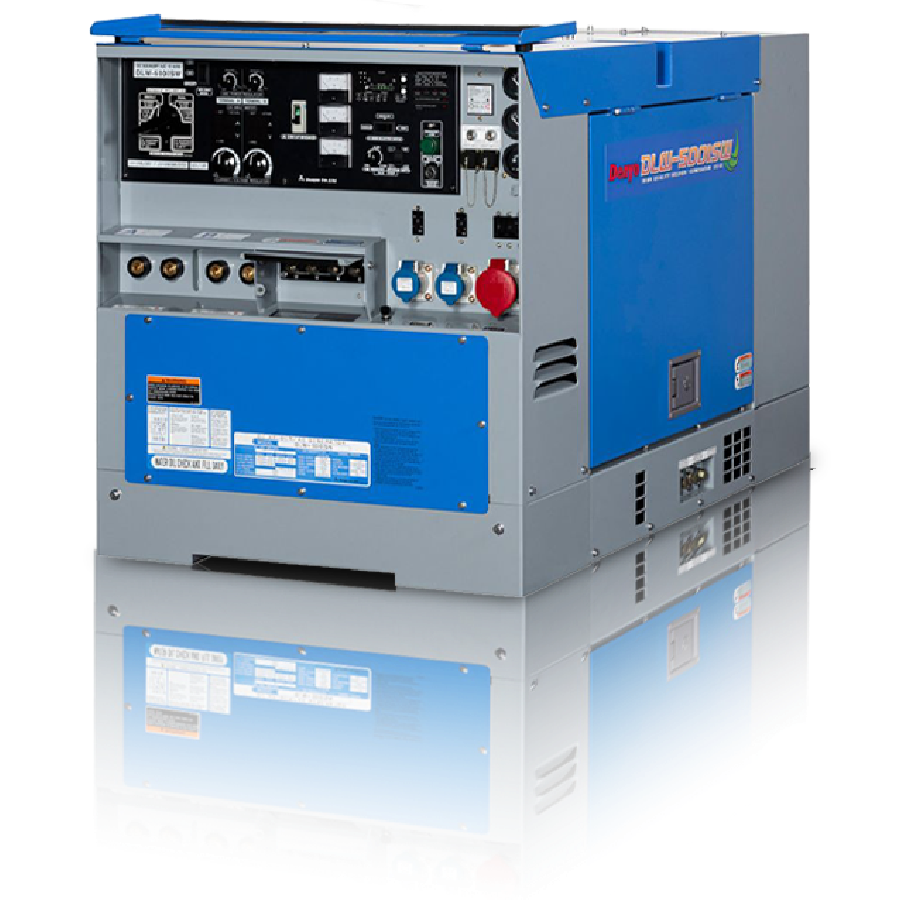
In addition, our latest innovation, the DLW-500ISW welding machine, is designed with Smart Stick Functionality to automatically shut off the idling engine, effectively mitigating excessive fuel consumption due to user forgetfulness or carelessness.
Durability for Long-Term Usage
There is a common belief that high-speed engine welder are less durable than their low-speed equivalents. However, that is heavily dependent on the quality of the built-in engine and alternator. It is our responsibility to offer the best to our customers; hence, Denyo welders are all equipped with a high-performance Japanese engine that is trusted worldwide, and Denyo’s patented alternator, which can generate electricity with high efficiency, offering both excellent quality and durability.
To bring value to our customers, Denyo has precisely calculated the flow of cooling air in the canopy during the design stages to improve the overall cooling effectiveness of the engine and alternator, which in turn prevents the components from overheating and damage. With the vote of confidence from our existing users who perform welding operations in hot (Middle East) and cold (Russia) climates, you can be assured that Denyo engine-driven welders are robust and built to last.
Reduce Noise Emission
As mentioned earlier, a high-speed engine generates high noise emissions, which can cause disturbance to the surroundings. It is especially hazardous for welding operators who are exposed to loud, prolonged noise during welding activities, which can potentially damage the ears and lead to hearing impairment.
Denyo high-speed engine welder mitigates noise emission with the improvisation of the acoustic enclosure and engine design to effectively contain the noise level that surpasses global standards for noise control, allowing welding projects to be conducted nearer to noise-sensitive areas (E.g. healthcare facilities).
Conclusion
In this article, we have identified and explained the different insights of the Denyo high-speed engine welder. If you have any further questions regarding the Denyo welder or other operation-related concerns, please don’t hesitate tocontact usso we can address your concerns.